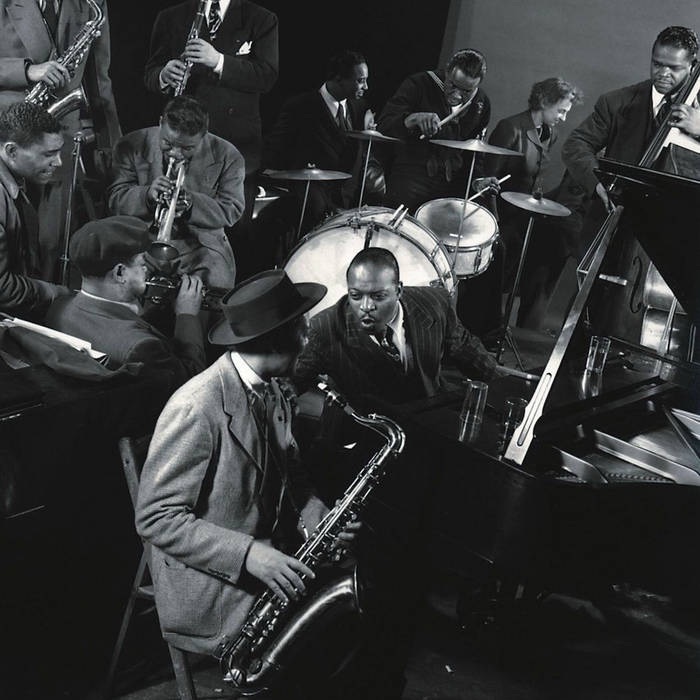
Few names in jazz history carry the weight and influence of Count Basie. A masterful pianist, bandleader, and composer, Basie revolutionized big-band jazz with his signature swing style, minimalist piano technique, and an ensemble that defined rhythm and precision. His legacy spans decades, shaping the sound of jazz and inspiring generations of musicians.
Born William James Basie on August 21, 1904, in Red Bank, New Jersey, Basie was introduced to music at an early age. His mother, a pianist, gave him his first lessons, setting the foundation for a career that would later transform jazz. Though initially drawn to the drums, Basie ultimately found his calling at the piano, influenced by stride pianists like James P. Johnson and Fats Waller.
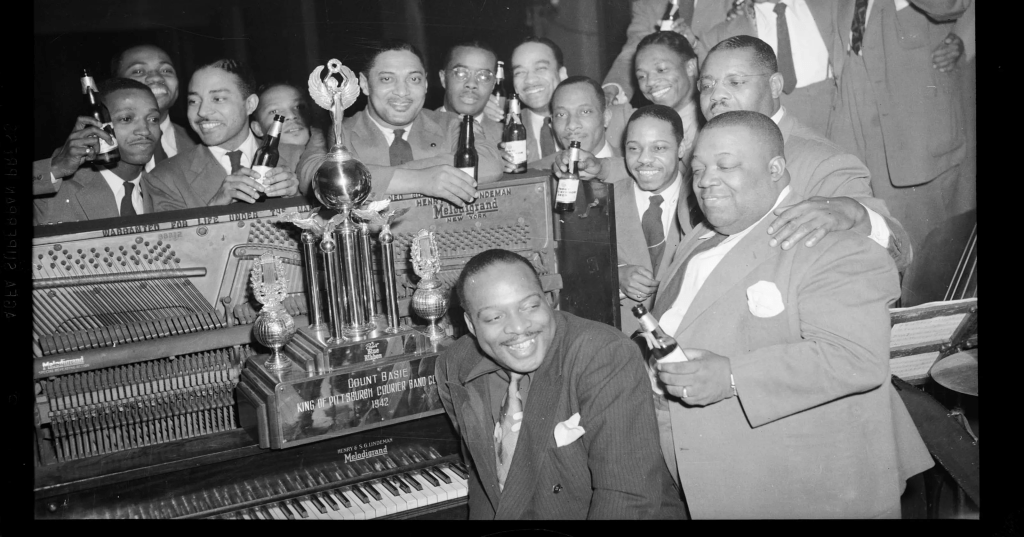
Basie’s journey took a pivotal turn in Kansas City, where he became a part of the vibrant jazz scene. In 1935, he formed the Count Basie Orchestra, a band that would soon become synonymous with swing. His approach was groundbreaking—he emphasized the rhythm section, introduced “head arrangements” (music created and memorized without written notation), and perfected the art of riff-based big-band jazz.
Basie’s orchestra was a powerhouse, featuring legendary musicians like Lester Young, Buck Clayton, Freddie Green, and Harry “Sweets” Edison. His minimalist piano style, often described as “less is more,” allowed his band’s rhythm section to shine, creating a smooth yet energetic sound that defined the swing era.
Hits like “One O’Clock Jump” and “Jumpin’ at the Woodside” became jazz standards, showcasing the band’s tight arrangements and infectious groove. Basie’s ability to blend precision with spontaneity made his orchestra one of the most celebrated in jazz history.
Basie’s influence extended beyond his own band. He collaborated with icons like Frank Sinatra, Ella Fitzgerald, and Billie Holiday, further cementing his place in music history. His orchestra continued to thrive for nearly 50 years, adapting to changing musical landscapes while maintaining its signature swing.

Throughout his career, Basie earned numerous accolades, including multiple Grammy Awards and the Kennedy Center Honors. His impact on jazz remains undeniable, with his music still studied, performed, and celebrated worldwide.
Though Count Basie passed away on April 26, 1984, his legacy endures. His orchestra continues to perform, keeping the spirit of swing alive for new generations. His contributions to jazz remain a testament to the power of rhythm, melody, and the sheer joy of making music.
For those who listen to Basie’s recordings, the magic of swing is as vibrant as ever—a reminder that jazz, at its core, is about movement, energy, and the timeless groove that keeps us dancing.
Swingin’ Down the Lane with David Miller
We’re dedicated to keeping the big band sound alive and well. Big bands have been around since the 1920’s, and the recent interest in swing music has rekindled the flame. New generations are thrilling to Benny Goodman, Artie Shaw, Count Basie, Tommy Dorsey, Glenn Miller and of course the illustrious Duke Ellington.

Heard every Sunday at 6pm on KNCT.
Episode 2224 Playlist
| Cherokee | Charlie Barnet |
| Tuxedo Junction | Erskine Hawkins |
| Squeeze Me | Fats Waller |
| Nobody’s Sweetheart | Eddie Condon |
| HCQ Strut | Hot Club of France |
| Lester Leaps In | Count Basie |
| When Lights Are Low | Lionel Hampton |
| High Society | Bob Crosby |
| Body and Soul | Coleman Hawkins |
| Schubert’s Serenade | John Kirby |
| Rosetta | Earl Hines |
| Dipper Mouth Blues | Muggsy Spanier |
| The Man I Love | Billie Holiday |
| Lunceford Special | Jimmie Lunceford |
| Mamie’s Blues | Jelly Roll Morton |
| Ko-ko | Duke Ellington |



 KNCT
KNCT 