
On the Dock with Rick Smith for January 26, 2022.
Special to MyKNCT.com
It’s boats and boating, fishing, fishing here On the Dock with Rick Smith, brought to you by Marine Outlet of Temple, your Central Texas just add water boat dealer.
Let’s talk lifejackets.
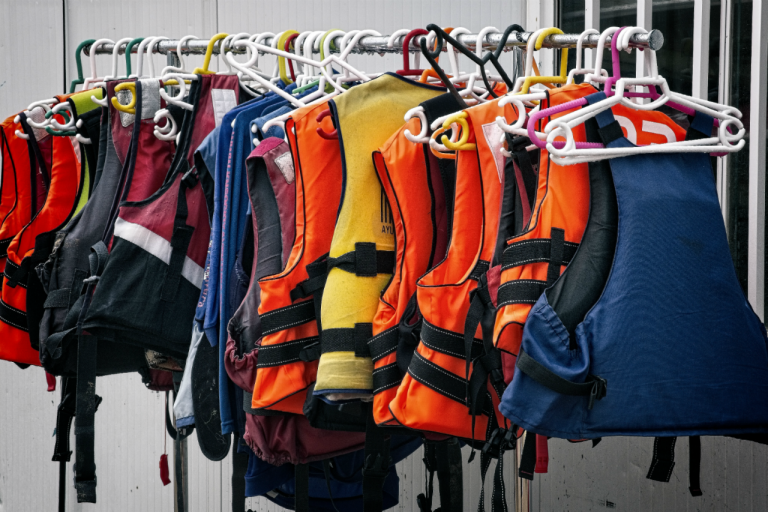
These are personal flotation devices, and they’re the single most important piece of equipment on your boat. More than 2/3 of all boating fatalities are drowning incidents and almost 90% of drowning victims were not wearing a life jacket.
There are several types of traditional foam flotation devices, as well as new inflatable life jackets. Each is designed for different boating activities and water conditions, and each has its own maximum buoyancy, performance level, and limitations. You should choose your life jacket based on your boating activities and conditions.
Life jackets must be United States Coast Guard approved in order to meet the requirements in Texas, there must be a properly fitting life jacket for each and every person aboard or recreational. Vehicle life jackets must be approved by the Coast Guard in serviceable condition and the appropriate size for the user, obviously they’re most effective when worn on a vessel underway.
Children under 13 must wear an appropriate Coast Guard approved PFD.
Texas also requires a life jacket to be worn by all personnel riding a personal watercraft. If the boat is 16 foot or longer, and is not a canoe or kayak, it must also have a throwable device, and these are typically called fisherman cushions.
So, get out those old lifejackets, check them on the kids to see that they still fit. You may have to buy a larger size for this season because you want to be sure that the life jacket fits comfortably and has enough buoyancy for the weight of the child.
There are some things you can do to take care of your life jackets, so let’s talk a little bit about that.
- Always check your life jackets at the beginning of each boating season.
- Check that all the hardware and straps are in good shape or firmly attached and are in working order.
- Check for leaks mildews, lumpy or hardened buoyancy material, or possible oil saturation in the fabric.
- Make sure there are no rips or tears in the fabric.
- Make sure that Mildew has not attacked the fabric.
You can take the fabric between two fingers and kind of pull on it, and if it rips then it means that it’s deteriorated beyond its useful life.
Make sure that the label states that it’s United States Coast Guard approved and that the label is attached and it is readable.
Be sure to discard and replace life jackets that show any signs of deterioration. Whether it’s tears, mildew, stains, punctures, or anything else. Don’t use a lifejacket or throwable flotation cushion as a kneeling pad or boat Fender and don’t use harsh detergents or gasoline to clean them. Do not for any reason remove any labeled straps or buckles.
When storing their life jackets, be sure to store them in a area with great ventilation.
If wet, allow them to dry thoroughly in the open air before storing drying a life. Placing it in a dryer or using a direct heat source will typically destroy some of its properties, so it’s best not to do that. If you decide to use one of the inflatable jackets, make sure that it’s an auto inflatable, as they also have some inherent buoyancy issues. Check the status of the inflator, this is a CO2 cartridge every time to be certain the cartridge is properly installed and the equipment is in working order.
Check for any leaks every couple of months. Inflate the life jacket orally and leave it overnight to check for possible leaks. If it does have any kind of leak at all, replace the jacket immediately.
Immediately replace any spent CO2 cartridges with new ones.
Frequent users of inflatables should check them often, especially if used around sharp equipment like fishing gear, make sure all straps and zippers are in working order and keep your equipment in serviceable condition. Remember, inflatables are not recommended for individuals who cannot swim and are not for use where water impact is expected, like water skiing or riding a personal watercraft. Also, inflatables are not recommended for children under the age of 16.
These are just some of the safety tips to think about on your PFDs. Personal flotation devices come in all price ranges and sizes and colors. Make sure that you get the one that serves your needs.
Very inexpensive insurance on your boat and if you happen to be inspected by one of the authorities and don’t have the proper lifejacket then you’re going to pay a lot more than the cost of the jacket.
This is Rick Smith on the dock, wishing you clear horizons, fair winds, and tight lines.



 KNCT
KNCT 