

Audubon’s 122nd Christmas Bird Count will take place Tuesday, December 14, 2021 through Wednesday, January 5, 2022. The Christmas Bird Count occurs December 14 to January 5 every year.
According to the National Audubon Society, the data collected by Christmas Bird Count participants over the years provide a wealth of information to researchers interested in the long-term study of early winter bird populations across North America.
Prior to the turn of the 20th century, hunters engaged in a holiday tradition known as the Christmas “Side Hunt.” They would choose sides and go afield with their guns—whoever brought in the biggest pile of feathered (and furred) quarry won.
Conservation was in its beginning stages in that era, and many observers and scientists were becoming concerned about declining bird populations. Beginning on Christmas Day 1900, ornithologist Frank M. Chapman, an early officer in the then-nascent Audubon Society, proposed a new holiday tradition—a “Christmas Bird Census” that would count birds during the holidays rather than hunt them. Some counts have been running every year since then and the CBC now happens in over 20 countries in the western hemisphere!
So began the Christmas Bird Count. Thanks to the inspiration of Chapman and the enthusiasm of 27 dedicated birders, 25 Christmas Bird Counts were held that day. The locations ranged from Toronto, Ontario to Pacific Grove, California with most counts in or near the population centers of northeastern North America. Those original 27 Christmas Bird Counters tallied around 90 species on all the counts combined.
Each November, birders interesting in participating in the CBC can sign up and join in through the Audubon website. From December 14 through January 5 each year tens of thousands of volunteers throughout the Americas brave snow, wind, or rain, and take part in the effort. Audubon and other organizations use data collected in this long-running wildlife census to assess the health of bird populations, and to help guide conservation action.
The data collected by observers over the past century allow Audubon researchers, conservation biologists, wildlife agencies and other interested individuals to study the long-term health and status of bird populations across North America. When combined with other surveys such as the Breeding Bird Survey, it provides a picture of how the continent’s bird populations have changed in time and space over the past hundred years.
So how does someone participate?
There is a specific methodology to the CBC, and all participants must make arrangements to participate in advance with the circle compiler but the CBC is open to all!
Each count takes place in an established 15-mile diameter circle, and is organized by a count compiler. Count volunteers follow specified routes through a designated 15-mile (24-km) diameter circle, counting every bird they see or hear all day. It’s not just a species tally—all birds are counted all day, giving an indication of the total number of birds in the circle that day.
Birders of all skill sets are involved in the CBC. If you are a beginning birder, your compiler will pair you with an expert initially.
If your home is within the boundaries of a CBC circle, then you can stay at home and report the birds that visit your feeder on count day as long as you have made prior arrangement with the count compiler.
Sign up for the latest on Audubon’s community science programs and find out how you can help support the Christmas Bird Count by visiting Audubon.org. You can also explore local Christmas Bird Counts hosted by the Fort Hood Adaptive and Integrative Management Team and Twin Lakes Audubon Society, and also others throughout Central Texas and beyond.
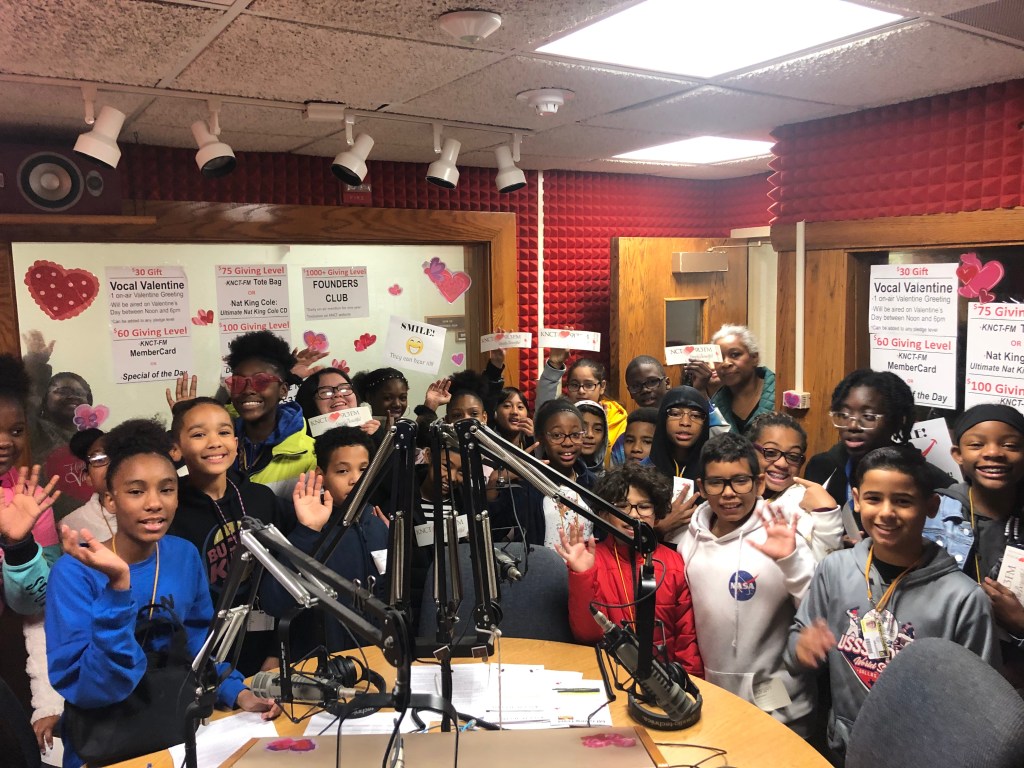
To learn more about the Cen-Tex Sustainable Communities Partnership and for local event updates, check out our Facebook page Centex Sustains. Feel free to send questions and topic suggestions for this show to centexsustains@gmail.com. Join us next week on Monday at 6:15 pm on KNCT-FM 91.3 to learn more about environmental and sustainable practices.

 KNCT
KNCT 