
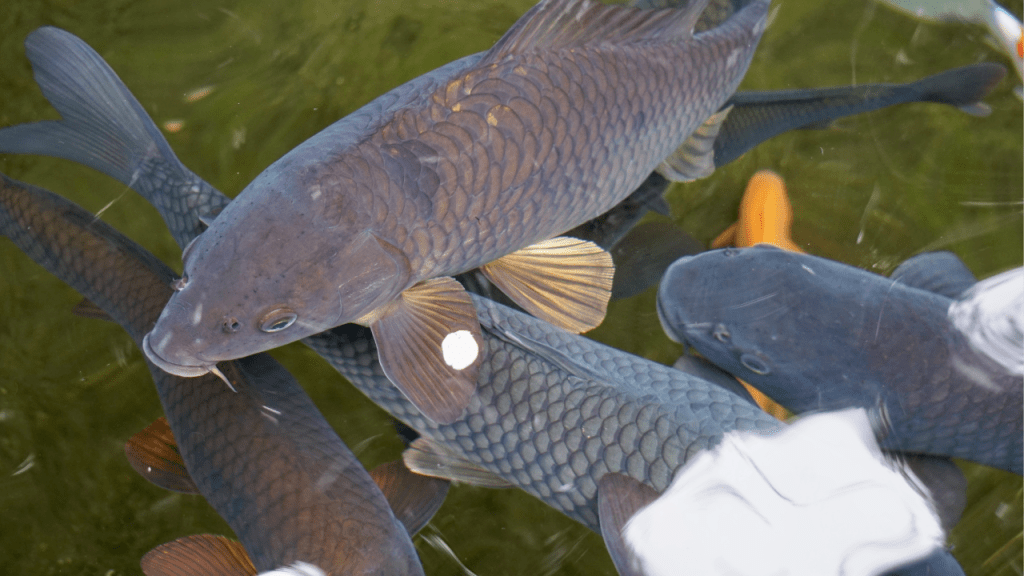
Texas wildlife officials are calling on anglers to help stop a dangerous invasive fish before it reaches the state’s rivers—and they’re willing to pay for it. The Texas Parks and Wildlife Department (TPWD) has launched a $100‑per‑fish bounty for any verified black carp caught in Texas, with reimbursements capped at 10 fish per angler per month. Texas became the 27th state to join the effort after announcing its participation in December 2025.
The urgency is real. Black carp have never been documented in Texas waters, but they are now closer than ever. In late October 2025, biologists confirmed a single black carp in the Little River, a tributary of the Red River in Arkansas near Texarkana—just upstream from the Texas‑Oklahoma border.
“This detection is significantly closer to Texas waters than any past records,” TPWD spokesperson Kirk McDonnell told Chron. “Angler assistance in keeping an eye out for them in Texas‑Oklahoma waters of the Red River and tributaries will help us monitor for their movement into our waters.”
McDonnell noted that black carp are strong swimmers capable of traveling long distances. Without barriers such as dams, they can move upstream on their own. Transport over dams—such as into Lake Texoma—would only occur with human assistance, intentional or otherwise.
A Nationwide Effort to Track a Stealthy Invader
The bounty program is part of a broader monitoring initiative known as “Keep, Cool, Call,” originally developed by the U.S. Geological Survey’s Columbia Environmental Research Program. Over the past decade, commercial fishers and recreational anglers have helped scientists track the species’ spread across the Mississippi River Basin, providing rare biological samples and catch data.
Black carp are notoriously difficult to study. “Because the black carp are rarely caught, less is known about them compared to other invasive carps,” McDonnell said. Community reporting helps fill those gaps.
The program is now coordinated by the U.S. Fish and Wildlife Service, which expanded the bounty area in 2025 to include the Arkansas‑Red‑White and Lower Mississippi River subbasins. That expansion brought Texas into the fold, making it one of 28 participating states. State agencies like TPWD serve as the bridge between anglers and federal researchers, documenting catches, collecting samples, and processing bounty payments.
Why Black Carp Pose a Serious Threat to Texas Waters
Native to eastern Asia, black carp arrived in the U.S. in the 1970s and 1980s, often mixed in with grass carp shipments. They were used in aquaculture to control snails and parasites, but flooding events allowed them to escape into the Mississippi River system.
Their diet is what alarms Texas biologists most. Black carp feed primarily on mussels and snails, putting them in direct conflict with Texas’ rich—but vulnerable—native mussel populations.
“Texas boasts more than 50 species of native unionid mussels, many of which are imperiled,” McDonnell said. “Should black carp become established, they could contribute to further declines of these ecologically important species.”
What Anglers Should Do: Keep, Cool, Call
TPWD urges anglers who believe they’ve caught a black carp to follow the Keep, Cool, Call protocol, outlined in this official handout:
KEEP
- Do not release the fish.
- Photograph the fish—especially the head, mouth, and full length.
- Record the exact location (GPS coordinates preferred).
- Note gear, bait, and habitat conditions.
COOL
- Humanely kill the fish.
- Keep it on ice or freeze it.
(Live possession of black carp is illegal.)
CALL
- Contact the appropriate state agency listed in the handout.
- TPWD’s invasive species team will verify the catch and guide anglers through the bounty process.
The handout also includes side‑by‑side comparisons of black carp and commonly mistaken species—grass carp, common carp, buffalo species, and blue suckers—to help anglers avoid misidentification.
Protecting Texas Waters Before It’s Too Late
For now, Texas remains free of confirmed black carp. But with the species edging closer to the Red River Basin, wildlife officials say early detection is critical. The bounty program is designed to mobilize anglers as the state’s first line of defense.
Whether you’re fishing the Red River, Lake Texoma, or nearby tributaries, TPWD asks anglers to stay alert, document suspicious catches, and report them promptly. A single verified fish could help protect entire ecosystems.


 KNCT
KNCT 
Leave a comment