
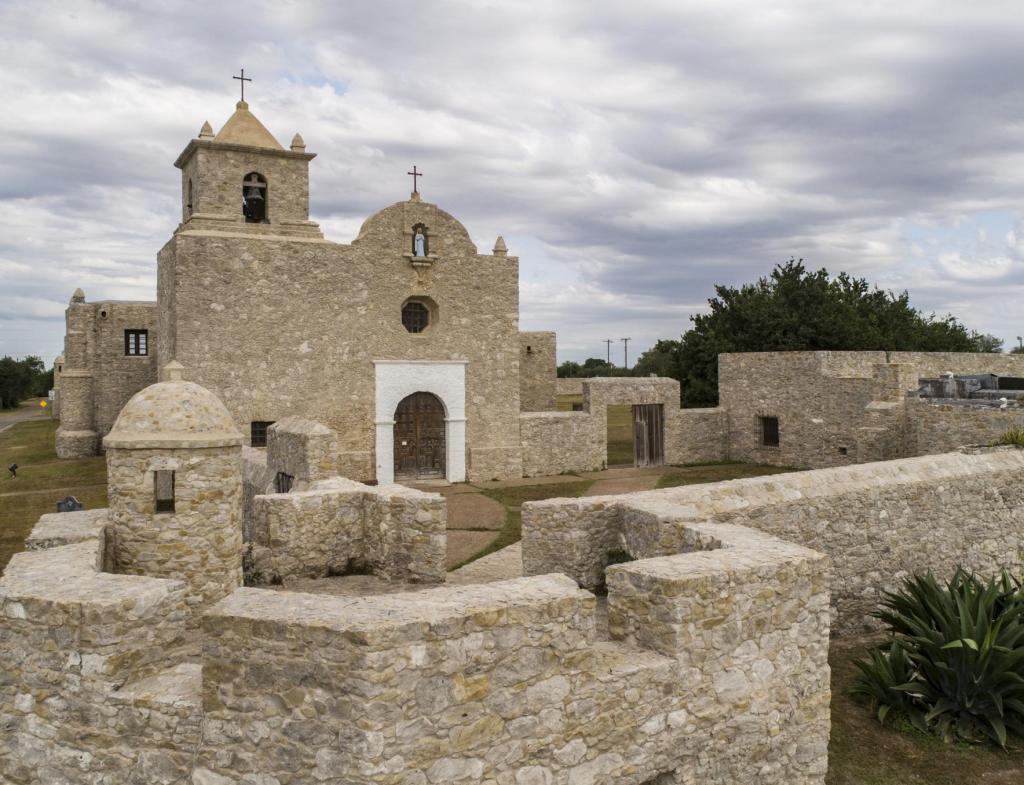
Pivotal Texas Revolution site becomes newest THC state historic site
One of the most storied landmarks of the Texas Revolution entered a new chapter this week as the Texas Historical Commission (THC) and the Diocese of Victoria finalized the historic transfer of Presidio La Bahía State Historic Site. The move places one of Texas’ most visited and symbolically important sites under the stewardship of the state’s official preservation agency.
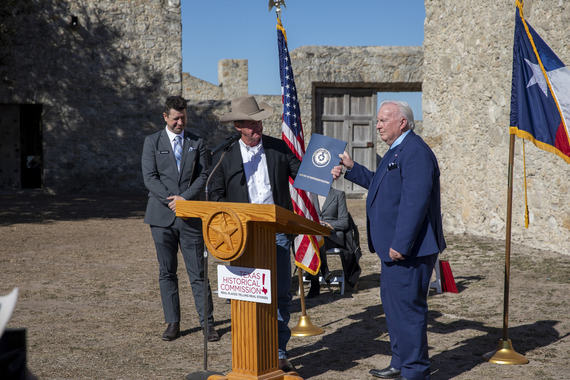
The transition became official during a public ceremony Wednesday attended by roughly 75 people, marking the culmination of a multi‑year process involving local, state, and international church authorities.
“On the side of the Catholic Church, this undertaking required approval from all levels of the Church — from the local parish, to the Diocese, all the way to the Vatican in Rome,” said Site Manager Scott McMahon. “Our staff here as well as the entire organization are grateful to the Catholic Church entrusting us with the preservation and care of this historic fort.”
A Landmark of Texas Independence
Presidio La Bahía, designated a National Historic Landmark, stands at the center of some of the most consequential events in Texas history. The fort is best known as the site of the Goliad Massacre, where Col. James Fannin and hundreds of Texian soldiers were executed on Palm Sunday in 1836 following their defeat at the Battle of Coleto Creek. The tragedy galvanized support for Texas independence and remains a defining moment in the state’s historical narrative.
The Catholic Church has overseen the site since 1855, with the Diocese of Victoria assuming direct ownership and operation in 1982. The THC began managing day‑to‑day operations in December 2022, paving the way for the formal transfer completed this week.
Preservation for Future Generations
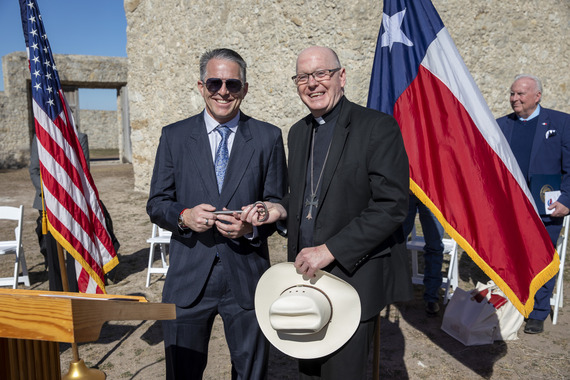
THC Vice Chairman Garrett Donnelly said the acquisition ensures long‑term protection of the site and strengthens the agency’s ability to interpret its history for visitors.
“The Texas Historical Commission’s commitment to this site ensures that the resources here are preserved for the generations that will follow us,” Donnelly said. “It guarantees that the lessons of Goliad — including the courage, sacrifice, and resilience embodied here — will continue to be taught through real encounters that make history tangible.”
The transfer also positions Presidio La Bahía for expanded programming and enhanced visitor experiences as Texas approaches its Bicentennial in 2036.
Leaders Mark a Historic Moment
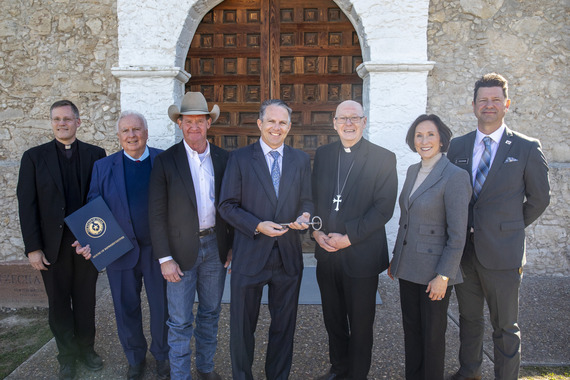
Among those offering remarks at the ceremony were Bishop Brendan Cahill of the Diocese of Victoria, State Sen. Lois Kolkhorst, and State Rep. A.J. Louderback, each highlighting the fort’s enduring importance to Texas identity and heritage tourism.
About Presidio La Bahía
Established in 1749 during the Spanish colonial era, Presidio La Bahía played a central role in the settlement and defense of the region. Its legacy spans Spanish, Mexican, and Texian periods, with its most enduring association tied to the events of 1836.
About the Texas Historical Commission
The THC oversees 42 state historic sites and leads statewide programs including the Texas Heritage Trails, Texas Main Street, and the Texas Historic Courthouse Preservation Program. Its mission is to protect and preserve Texas’ historic and prehistoric resources for public education, enjoyment, and economic benefit.



 KNCT
KNCT 
Leave a comment