
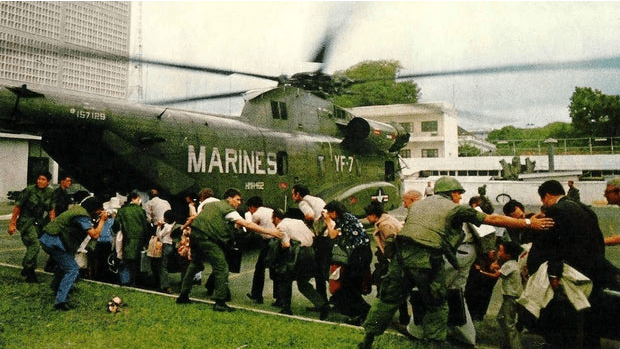
On April 30, 1975, the world watched as Saigon, the capital of South Vietnam, fell to the advancing North Vietnamese forces. It was the dramatic conclusion to the Vietnam War, a conflict that had spanned decades and claimed millions of lives. The fall of Saigon marked the official end of the war and the beginning of a new era for Vietnam—one under communist rule.
In the weeks leading up to the fall, the North Vietnamese Army had been making rapid advances, capturing key cities and pushing South Vietnamese forces into retreat. The United States, which had been deeply involved in the war, had already begun withdrawing troops, leaving South Vietnam vulnerable. As the North Vietnamese closed in, panic spread throughout Saigon. Thousands of civilians, government officials, and military personnel scrambled to escape, fearing retribution from the communist forces.
One of the most iconic moments of the fall was the Operation Frequent Wind, the largest helicopter evacuation in history. The U.S. scrambled to evacuate American personnel and South Vietnamese allies from the city. Helicopters landed on rooftops, including the U.S. Embassy, where desperate civilians tried to climb over walls to board flights to safety. The images of helicopters lifting off while people clung to them became symbols of the chaotic end of the war.
By the morning of April 30, North Vietnamese tanks rolled through the streets of Saigon, crashing through the gates of the Presidential Palace. South Vietnamese President Duong Van Minh, who had taken office just days earlier, surrendered unconditionally. The city was officially under communist control, and soon after, Saigon was renamed Ho Chi Minh City, in honor of the North Vietnamese leader.
For many South Vietnamese, the fall of Saigon meant the loss of their homeland. Thousands fled the country, becoming refugees in the United States and other nations. Others were sent to re-education camps, where they endured harsh conditions under the new regime. The war had left Vietnam devastated, but over the years, the country rebuilt itself, eventually becoming a thriving economic power.
The fall of Saigon remains one of the most significant moments in modern history. It marked the end of U.S. involvement in Vietnam and reshaped global politics. For those who lived through it, the memories of that day—of desperation, loss, and survival—are still vivid, even 50 years later.




 KNCT
KNCT 