
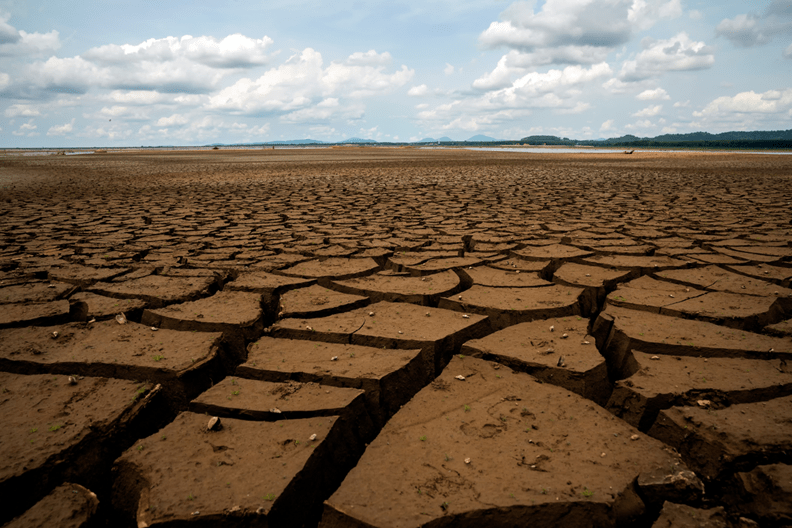

Federal Disaster Loans Available for Small Businesses and Nonprofits Affected by Drought
The U.S. Small Business Administration (SBA) has announced the availability of low-interest federal disaster loans to assist small businesses and private nonprofit organizations in Texas, New Mexico, and Oklahoma. These loans aim to mitigate financial losses caused by the drought that began on November 1, 2024.
The SBA’s Economic Injury Disaster Loan (EIDL) program offers support to small businesses, agricultural cooperatives, nurseries, and private nonprofits facing economic challenges due to the disaster. While agricultural producers, farmers, and ranchers are generally ineligible, small aquaculture enterprises may qualify. The loans are designed to cover working capital needs, such as fixed debts, payroll, accounts payable, and other expenses, regardless of physical damages.
Qualified applicants may secure loans of up to $2 million, with interest rates as low as 4% for small businesses and 3.625% for nonprofits. Loan terms can extend up to 30 years, and payments are deferred for 12 months following the first loan disbursement. Loan amounts and terms are determined based on the applicant’s financial condition.
Texas Governor Greg Abbott declared a state of emergency due to the drought conditions. This emergency declaration, initially issued in July 2022 and later renewed in November 2024, allows state and local entities to accelerate response efforts and allocate resources effectively to mitigate the drought’s impact.
The disaster declaration covers the counties of Andrews, Aransas, Archer, Armstrong, Atascosa, Bandera, Bastrop, Baylor, Bee, Bell, Bexar, Blanco, Bosque, Bowie, Brewster, Briscoe, Brooks, Brown, Burleson, Burnet, Caldwell, Carson, Childress, Clay, Coleman, Collin, Collingsworth, Comal, Concho, Cooke, Coryell, Cottle, Crane, Crockett, Crosby, Culberson, DeWitt, Delta, Denton, Dickens, Dimmit, Donley, Duval, Ector, Edwards, El Paso, Falls, Fannin, Fayette, Floyd, Foard, Franklin, Frio, Garza, Gillespie, Glasscock, Goliad, Gonzales, Gray, Grayson, Guadalupe, Hall, Hamilton, Hardeman, Haskell, Hays, Hill, Hudspeth, Hunt, Irion, Jack, Jeff Davis, Jim Wells, Karnes, Kendall, Kent, Kerr, Kimble, King, Kinney, Kleberg, Knox, La Salle, Lamar, Lampasas, Lavaca, Lee, Limestone, Live Oak, Llano, Loving, Mason, Maverick, McCulloch, McLennan, McMullen, Medina, Menard, Midland, Milam, Mills, Montague, Morris, Motley, Nueces, Palo Pinto, Parker, Pecos, Presidio, Reagan, Real, Red River, Reeves, Refugio, Robertson, San Patricio, San Saba, Schleicher, Stephens, Stonewall, Sutton, Swisher, Terrell, Throckmorton, Titus, Travis, Upton, Uvalde, Val Verde, Victoria, Ward, Washington, Webb, Wheeler, Wichita, Wilbarger, Williamson, Wilson, Winkler, Wise, Young and Zavala in Texas.
Qualified applicants may secure loans of up to $2 million, with interest rates as low as 4% for small businesses and 3.625% for nonprofits. Loan terms can extend up to 30 years, and payments are deferred for 12 months following the first loan disbursement. Loan amounts and terms are determined based on the applicant’s financial condition.
Interested parties can apply online at sba.gov/disaster or contact the SBA’s Customer Service Center at (800) 659-2955 for assistance. Applications must be submitted by November 25, 2025. For individuals with hearing or speech disabilities, telecommunications relay services are available by dialing 7-1-1.
In addition to the SBA’s Economic Injury Disaster Loan (EIDL) program, there are several other disaster assistance programs available:
- FEMA Individual Assistance Program: This program provides financial aid and direct services to individuals and households affected by disasters. It covers uninsured or underinsured expenses and serious needs, such as housing, medical care, and crisis counseling.
- Disaster Unemployment Assistance (DUA): Administered by FEMA, DUA offers temporary financial assistance to individuals who have lost their jobs due to a disaster and are not eligible for regular unemployment benefits.
- Transitional Sheltering Assistance (TSA): FEMA provides short-term lodging assistance for disaster survivors who cannot return to their homes.
- Public Assistance Program: This program supports state, local, tribal, and territorial governments, as well as certain private nonprofit organizations, in rebuilding infrastructure and restoring services after a disaster.
- Red Cross Emergency Assistance: The American Red Cross offers shelter, food, and other emergency services to disaster survivors.



 KNCT
KNCT 