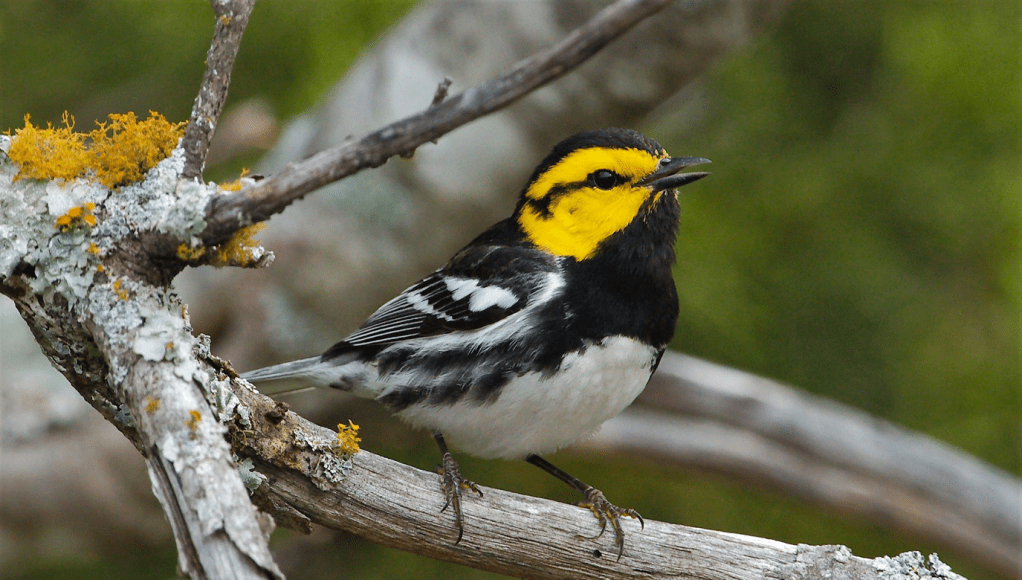
In the rich, oak-juniper forests of central Texas, a small but spirited songbird known as the golden-cheeked warbler flits through the trees. This charming bird, with its striking black and yellow plumage, has long captured the hearts of bird watchers and conservationists alike. However, the golden-cheeked warbler’s journey has been anything but easy.
The U.S. Fish and Wildlife Service recently announced a pivotal 90-day finding triggered by a petition to delist the species from the Endangered Species Act (ESA). This finding, while not immediately altering the bird’s endangered status, initiates a rigorous review of all available biological information. The idea of change sparks both hope and concern among those dedicated to the warbler’s survival.
Originating in the uniquely textured bark of juniper trees, the golden-cheeked warbler’s story is deeply intertwined with its habitat. The bird’s breeding grounds are limited to the oak-juniper forests of central Texas, where it utilizes the shredding bark of juniper trees as nesting material. Each year, these vibrant songbirds migrate south, wintering in the lush pine-oak forests of Central and South America before returning to Texas to breed.
The golden-cheeked warbler’s plight began in earnest in 1990, when it was first listed as endangered due to significant habitat loss and degradation. Urban development, agricultural expansion, and other forms of habitat destruction had severely reduced the bird’s breeding and nesting areas. Despite conservation efforts, these threats have persisted, continuing to impact the species’ population today.

In 2021, recognizing the ongoing challenges faced by the warbler, the U.S. Fish and Wildlife Service initiated a species status assessment. This thorough scientific assessment aimed to inform a comprehensive five-year review of the bird’s conservation status. The meticulous review process culminated in a recent recommendation to reclassify the warbler from endangered to threatened.
The Service’s newly published five-year status review highlights positive strides in conservation and recovery, yet it remains distinct from the recent 90-day finding. The five-year review is a routine action undertaken to assess progress and determine necessary adjustments in conservation strategies.
With this new 90-day review underway, the Service is calling upon the public to contribute any new scientific or commercial data regarding the warbler’s status and threats. This collaborative approach ensures that the most current and accurate information is used to guide future ESA decisions. The public’s input is crucial in shaping the future of the golden-cheeked warbler, offering a chance for renewed hope and concerted efforts toward its recovery.
Transparency and science-driven decision-making stand at the forefront of this endeavor. The U.S. Fish and Wildlife Service is committed to maintaining high standards, ensuring that every finding is rooted in thorough scientific analysis.
As we await the results of this comprehensive review, the golden-cheeked warbler continues to sing its melodious tune, a testament to resilience and the enduring beauty of nature. For more details on the 90-day finding and how to submit information, interested individuals can visit www.regulations.gov and search under docket number FWS-R2-ES-2024-0179. Amidst challenges and triumphs, the story of the golden-cheeked warbler showcases the delicate balance between conservation efforts and the ongoing threats to our natural world. And as the golden-cheeked warbler soars through the skies, a symbol of hope and perseverance, the world watches and waits, hoping that this beloved songbird will continue to grace us with its presence for generations to come.




 KNCT
KNCT 