
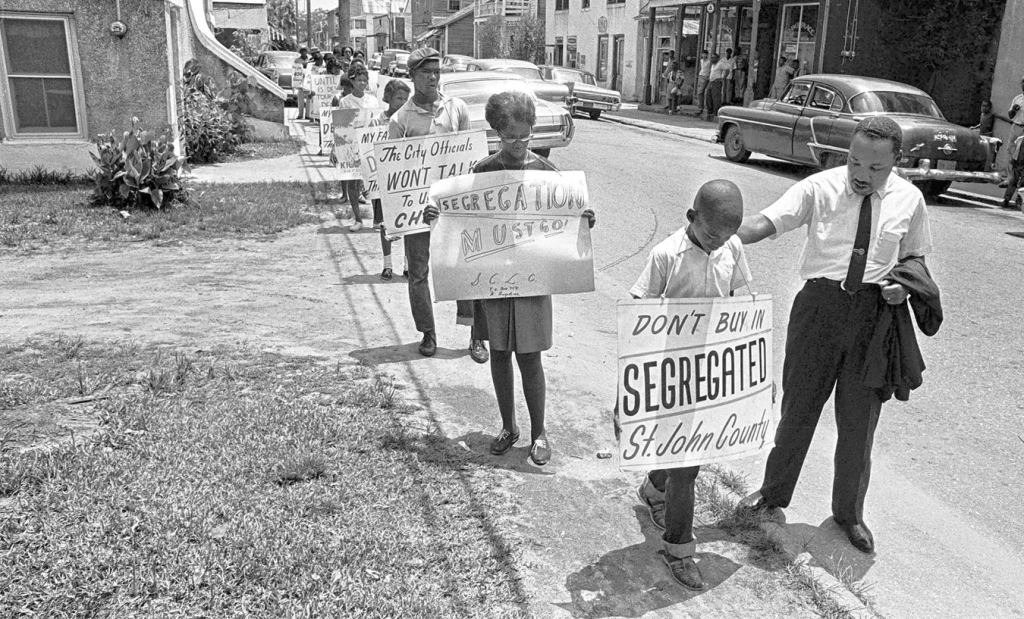
Dr. Martin Luther King Jr. stood on the weathered steps of the historic St. Augustine church. The year was 1964, and the civil rights leader came to Florida to aid the escalating movement for racial equality in one of the South’s most entrenched segregated cities.
St. Augustine was a beautiful city with a dark history. Despite its scenic coastlines and historic architecture, it was a bastion of racial segregation and tension. Civil rights activists in St. Augustine had been fighting a lonely battle, and they called upon Dr. King and the Southern Christian Leadership Conference (SCLC) for support. Dr. King answered, bringing with him a surge of national attention and renewed vigor.
King’s presence in St. Augustine was a beacon of hope and a lightning rod for hostility. On one stormy June night, while staying at the Monson Motor Lodge, an establishment with a notorious record of denying service to Black patrons, Dr. King was arrested. Alongside him was the famed activist, Rabbi Israel Dresner. Their arrest was strategic—it highlighted the systemic injustices and brought greater media coverage to the ongoing struggle in St. Augustine.

One of the most iconic events during King’s time in St. Augustine was the incident at the Monson Motor Lodge. On June 18, 1964, a group of Black and white activists jumped into the segregated pool at the motel, in an act of peaceful protest. The motel manager, in a shocking move, poured muriatic acid into the pool to force them out. The disturbing images captured that day galvanized support for the civil rights movement and underscored the brutal reality of segregation.
Years later, Dr. King would reflect on his time in St. Augustine with a mixture of sorrow and pride. The courage of the local activists, the unyielding spirit of the protesters, and the eventual triumph of desegregation in St. Augustine were testament to the power of nonviolent resistance and the human spirit’s capacity for change.
The St. Augustine Movement may not be as widely known as the marches in Selma or the sit-ins in Greensboro, but it was a pivotal chapter in the Civil Rights Movement. Dr. King’s involvement brought national attention and pressure that led to tangible change. Today, St. Augustine stands not only as a symbol of America’s complex history but also as a testament to the relentless pursuit of justice.




 KNCT
KNCT 