
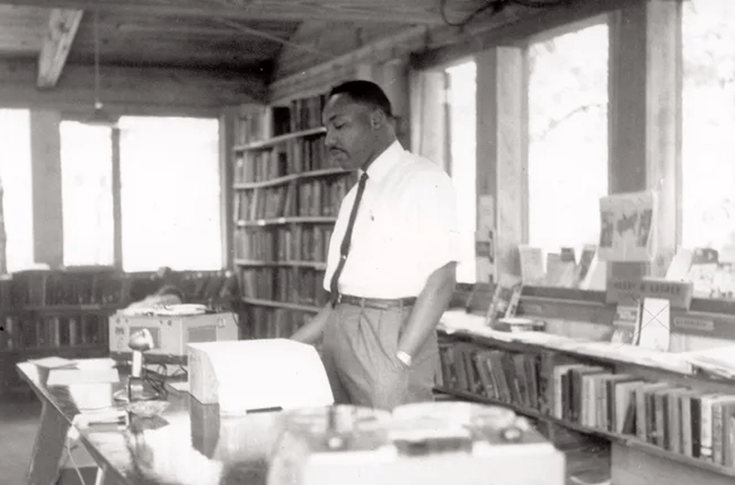
The Highlander Research and Education Center, originally known as the Highlander Folk School, was established in 1932 by activist Myles Horton, educator Don West, and Methodist minister James A. Dombrowski. The school’s founding mission was to provide an educational center in the South for training leaders in rural and industrial communities and conserving the cultural values of the Appalachian region.
Situated in Grundy County, Tennessee, Highlander initially focused on labor education and organizing efforts during the Great Depression. It supported workers’ rights, including organizing mine, mill, timber, and textile workers. Inspired by Danish folk schools, Highlander emphasized a participatory approach to education, where students learned through experience and collaboration.
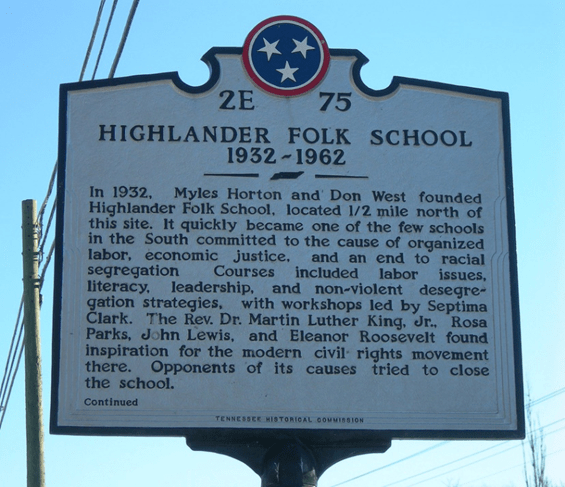
Highlander’s influence grew in the 1950s and 1960s as it became a critical incubator for the Civil Rights Movement. The school trained many prominent civil rights leaders, including Rosa Parks, who attended a workshop before her pivotal role in the Montgomery bus boycott. Martin Luther King Jr., John Lewis, and other activists also participated in Highlander workshops, where they honed their skills in nonviolent resistance and community organizing.
Highlander’s involvement in civil rights brought it under scrutiny from segregationist authorities, leading to legal and political pressure. In 1961, the state of Tennessee revoked Highlander’s charter and seized its land and buildings. Despite this, Highlander persevered by relocating to Knoxville, Tennessee, and later to its current home in New Market, Tennessee, under the name Highlander Research and Education Center.
In the early 1960s, Martin Luther King Jr. visited the Highlander Folk School in Monteagle, Tennessee. During one of his visits, he stayed in a cabin named “The Bungalow.” Late one night, James Bevel, a young activist, shared a song he wrote for King which was called “Ain’t Gonna Let Nobody Turn Me ‘Round.” This song captivated King so much that it became one of the unofficial anthems of the Civil Rights Movement.
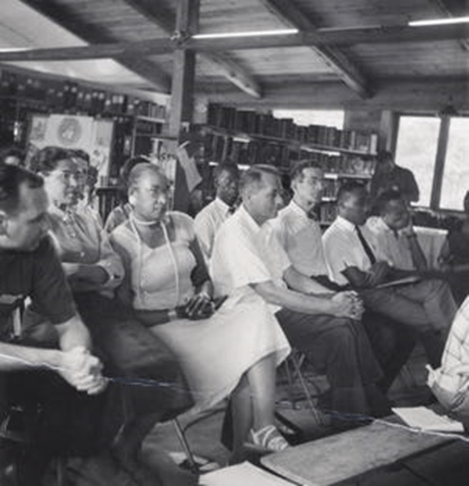
Another significant event at Highlander involved a photograph taken during one of King’s meetings. This photo would later be misused by segregationists trying to discredit King by claiming he was associated with communists—a common tactic by his opponents to undermine the movement.
Despite these challenges, King’s experiences at Highlander influenced many of his tactics for nonviolent activism and his approach to community organization and education. This connection underscores the diverse range of experiences and influences that shaped his leadership in the Civil Rights Movement.
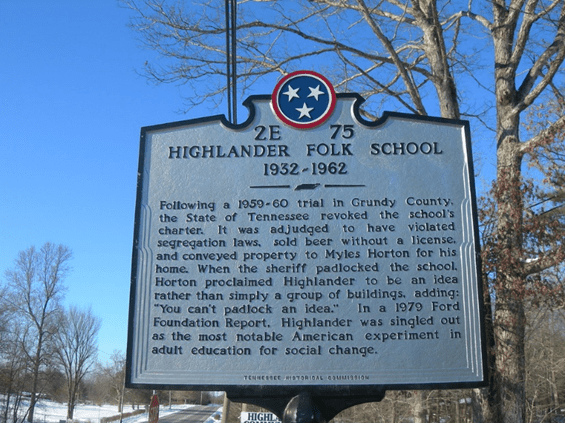
Today, Highlander continues to provide training and education for social justice leaders. Its focus has expanded to include various social issues, including environmental justice, immigrant rights, and LGBTQ+ rights. Highlander’s legacy of fostering grassroots activism and empowering marginalized communities endures, making it a beacon of hope and change.




 KNCT
KNCT 